Overview
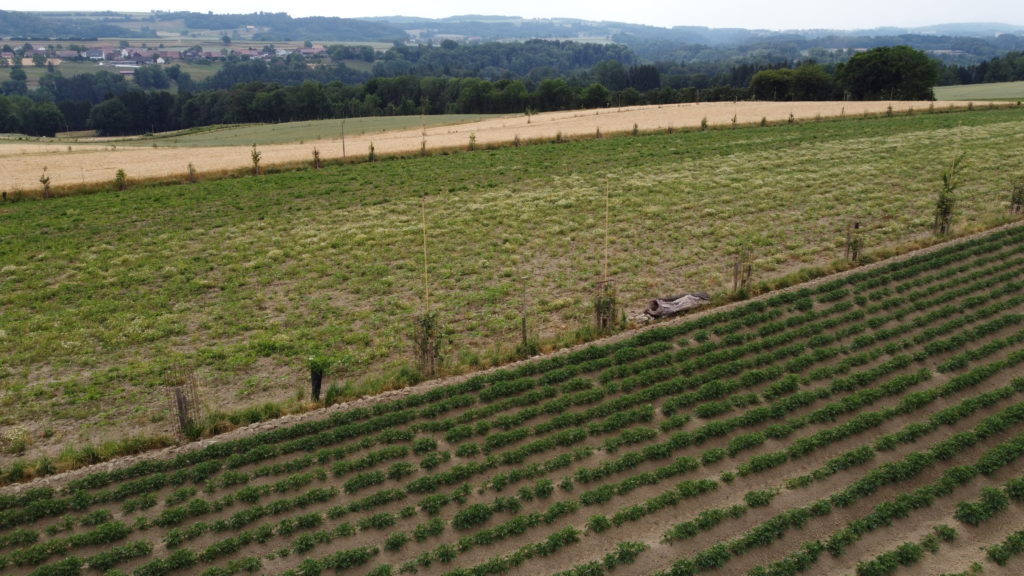
Agroforestry combines woody perennials, like trees and shrubs, with crops or livestock on the same parcel of land. The approach is associated with reduced soil erosion, increased organic matter, improved water availability, expanded habitat for biodiversity, and the storage of carbon in trees and soil. Interest in western Switzerland has grown in recent years, yet adoption remains limited, in part because modern systems are demanding to plan, establish, and maintain.
Monitoring & research
The project is open to farms in Geneva (GE), Jura and the Bernese Jura (JU/JB), Neuchâtel (NE), and Vaud (VD) operating under Proof of Ecological Performance (PER / ÖLN) or organic standards. Its target is for 140 farms to establish agroforestry on an additional 280 hectares, without a resulting reduction in farm income.
Scientific monitoring runs across all participating farms for the full eight years. The team tracks soil quality, biological soil activity, birds, pollinators and hoverflies, weed pressure, habitat suitability and carbon storage, comparing agroforestry plots against the wider farm where possible.
— Visual comparison
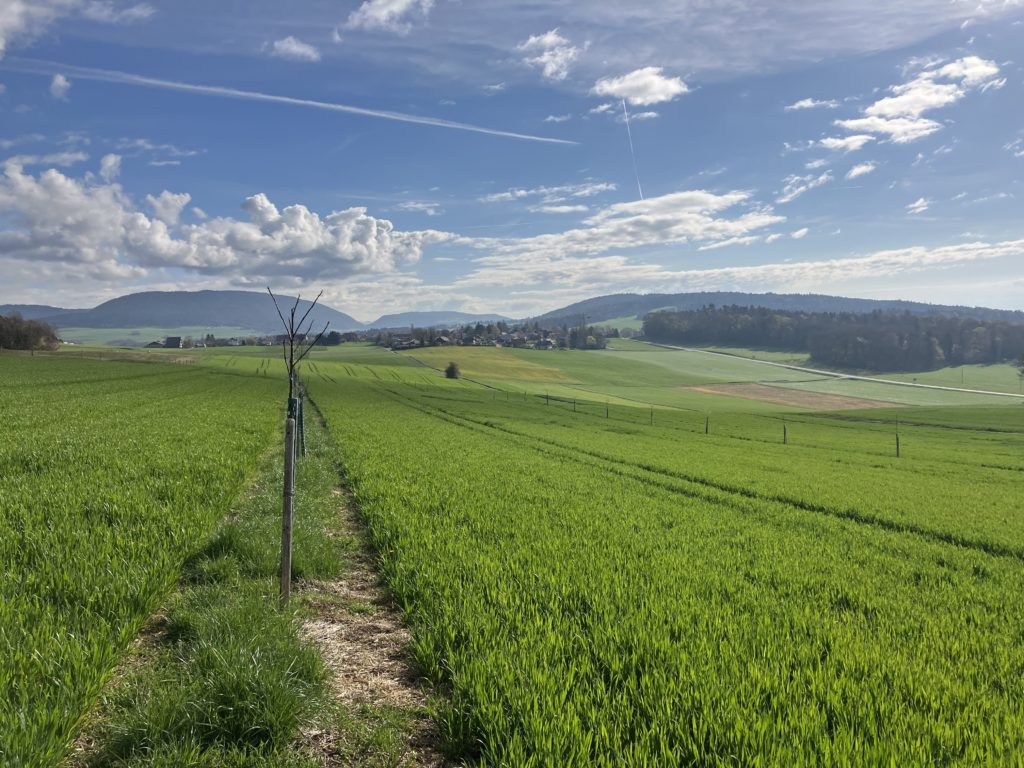
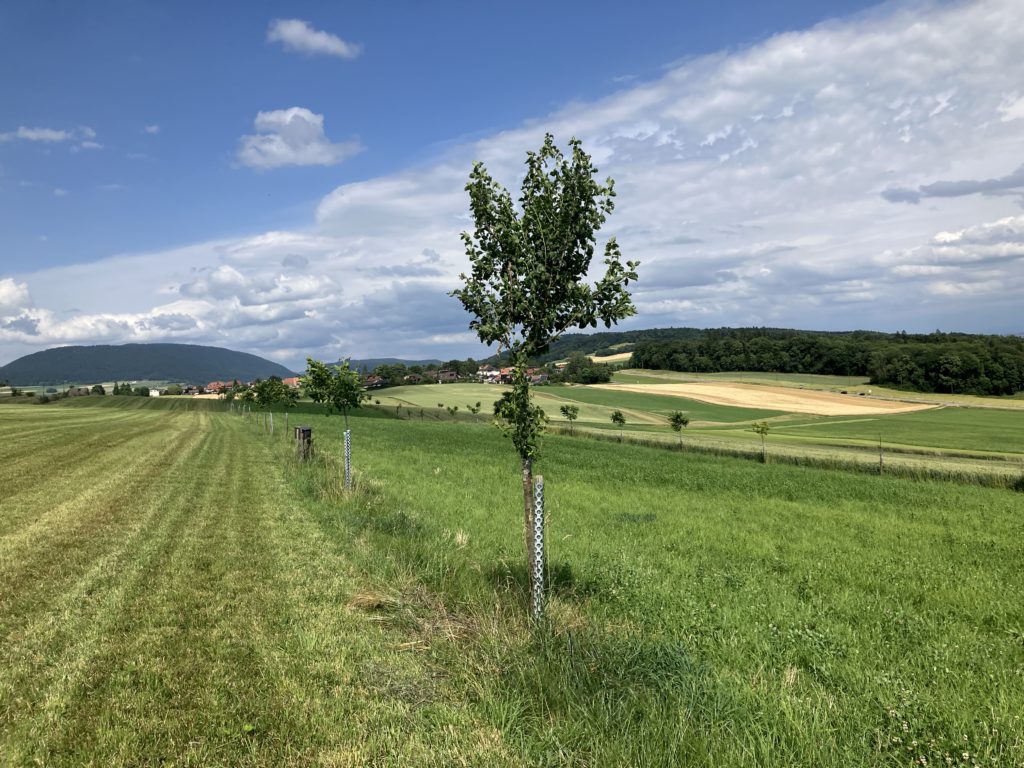
Before and after planting
Drag the slider to compare a site at planting with the same site once the trees are established.